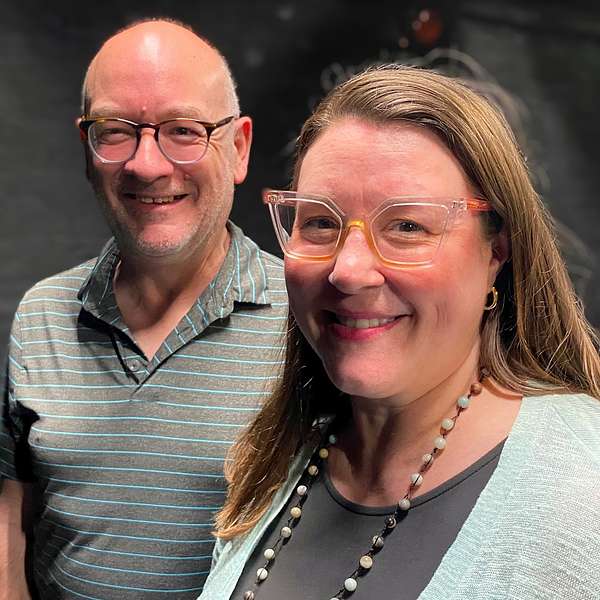
The Overlook with Matt Peiken

The Song Remains the Same | Asheville Symphony Chorus and Asheville Youth Choirs

Matt Peiken Episode 152

Use Left/Right to seek, Home/End to jump to start or end. Hold shift to jump forward or backward.

0:00 | 28:53

Choral groups were among the hardest-hit and slowest to rebound from the pandemic. Two of the region’s enduring choirs are still finding their footing both artistically and in the wider public.

Today, we hear from the choirs’ two artistic directors—Kyle Ritter of Asheville Symphony Chorus and Emily Floyd of Asheville Youth Choirs. They’re performing together April 27 at First Baptist Church. 

We talk with the choral directors about the challenges of surviving and rebounding from the pandemic. Kyle goes into detail about his choir’s relationship to the Asheville Symphony Orchestra and building an identity of its own. Emily talks about balancing the sacred and the secular. Both weigh in on marketing choral music to today’s distracted public, adapting pop music into choral music and the future of the world’s oldest art form. 


Help "The Overlook with Matt Peiken" podcast reach its very reachable goal: Just $1,000 in monthly contributions by Election Day. Membership at our Patreon campaign starts at just $5/month. 

Support the show

Support The Overlook by joining our Patreon campaign!

Advertise your event on The Overlook.

Instagram: AVLoverlook | Facebook: AVLoverlook | Twitter: AVLoverlook

Listen and Subscribe: All episodes of The Overlook

The Overlook theme song, "Maker's Song," comes courtesy of the Asheville band The Resonant Rogues.

Podcast Asheville © 2023

Matt Peiken: Describe working with Asheville Symphony Orchestra music director Darko Butorac. What is the collaboration like? 

Kyle Ritter: Darko is very collaborative in the choice of repertoire that best fits the ensemble as it is in a particular season. Darko certainly has ideas of pieces that he visions the orchestra and the choir to do together.

And they're very good ones. Obviously this year because of the Thomas Wolfe issue, we had to pivot a little bit. So then what comes into play is what space are we going to be performing in? How big does the orchestra need to be and how much space does the choir need? 

Matt Peiken: Yeah, how has moving away from Thomas Wolfe and into a church space affected what you bring on stage and how many voices you have and how you prepare? 

Kyle Ritter: So we performed our masterworks with the orchestra in February and that was at Diana Wortham Theatre, Which is a very limited space. We really had to pivot. It was not what we had planned to do at Thomas Wolfe.

We were planning to do much larger works in the beginning, but because we had to move that concert to Diana Wortham, we had to really rethink using the space parameters as a guide. So we ended up moving away from a German romantic program, Austrian romantic program, which was going to require large forces, both in orchestra and chorus to classical music.

So we ended up doing a Haydn mass for a much smaller orchestra that would then fit the chorus as well. 

Matt Peiken: When that kind of change happens, Does that affect participation in the choir itself? Do you have a hundred voices in your choir and you need more? What's happening there? 

Kyle Ritter: We have approximately a hundred voices in the group at this point. We are rebuilding after COVID like so many choral ensembles are. We never have not used the full ensemble in whatever piece that we've done.

Matt Peiken: Talking about rebuilding, I want both of you to speak this because I imagine your challenges might have been a little different. First of all, rebuilding a youth choir. I imagine, Emily, every year you have different voices coming in and out because kids have so much going on in their lives, whether it's sports, other after school programs, keeping a cohesive program together. Talk about the challenges that happened with your choir after COVID. 

Emily Floyd: Pre COVID, I personally had very few challenges with that. When you're somewhere a long time and there's a reputation and an interest and a value of the program, that wasn't something that I really worried about from year to year.

Now, post COVID, every choir in America, maybe even the world, is in a rebuild situation. In fact there are lily grants that are being Assigned to different organizations throughout the country studying this very fact. It laid dormant during the COVID time and now we're reviving it. And for me, really marketing and getting the word out that it's available is perhaps the biggest issue. Getting people to carve that time out into their weekly schedule and for parents to remember and know the value of music and the arts, the social connection, the spiritual material, the things that we all gain from singing texts that are worthy of contemplation and The restorative nature of music is something that I think families are really going to Remember was a valuable thing. For me right now It's just getting the word out so that we can continue to rebuild. 

Matt Peiken: I remember in maybe 2021 after the vaccine started being available. I remember choirs when they've started even before then they were trying to rehearse over zoom. Nobody liked it. It seemed like choirs just because of the breath and the exhalation that was required, that there was more of a challenge there in terms of getting people to feel confident enough and comfortable enough to go back out and sing in close proximity to each other. Four years later, are you still having to deal with that? Is that still an issue? You're nodding. Emily, talk about that. 

Emily Floyd: Yes, much of the fear about that is gone. Although there is some concern, especially if you're health compromised, you're a little more careful. It is true that we can pass things around when we sing. The breath is part of the pleasure and the health of singing, but it's also the thing that transmits. The awareness is higher of making sure you're healthy when you arrive at rehearsal or performances. But I don't think that's a barrier at this point. 

Matt Peiken: You mentioned how AYC became an entity in 2015. Why did it become its own organization or a differently branded organization? And what changed about the mission and how you go about doing your work? 

Emily Floyd: In 2015, the founders, I think just found a need to create an organization through the Academy for the Arts. We really wanted a community choir for children and youth. First Baptist church of Asheville really wanted to get on board and support that.

In fact, the academy is part of the church. And so a lot of the funding and the support, the volunteer manpower comes from the church. And then the symphony chorus came alongside in this new reiteration of AYC and said, we really want to partner. And for me, the intergenerational play, which we have a concert coming up in a couple of weeks where we're singing together, The energy that I feel from the symphony chorus about encouraging children and youth to have music education through a community choir fulfillment, restoration, community, all the things that we know are wonderful about the arts.

In this new iteration, we wanted to deepen the ties to the community and Particularly the arts community. So this new iteration is going to keep recruiting from schools and making sure that folks know that everyone is welcome to be a part. 

Matt Peiken: Has the repertoire changed or is the focus at all different?

Emily Floyd: Not really no. It is somewhat sacred, but also really just to restore, revive the soul. We sing for change, sing about things that matter. Peace is one of the components of our concert that's coming up. The rhythm of life, the pleasure of life. We're singing about nature. So things that children, youth, adults should all be attuned to. 

Matt Peiken: Kyle Emily, which is alluding to the marketing challenge of bringing young people into her choir. Now, are you facing a similar challenge four years later to get voices and how much turnover it can be attributed to the pandemic or otherwise. Has it been difficult to retain and recruit vocalists?

Kyle Ritter: You know, with a lot of choral groups, there is a core of people who were in it for thick and thin. And so those folks have returned because their devotion to the group has been decades long, many of them. We have a really pretty fantastic board of directors for Symphony Chorus that, have begun some initiatives to really target and invite people to consider being a part of the group.

And it is really paying off. So many choirs, it is taking time and patience. And we'll see the results over years. It's not going to happen immediately. 

Matt Peiken: Choirs have been around for many centuries. Is it harder to keep people interested in music that is now, to participate in vocal music that's hundreds of years old, in some cases, when there's more contemporary art forms, more things that are pulling at people's attention? Is it harder to engage, or is the challenge different, to engage vocalists today?

Kyle Ritter: I think there is a challenge certainly, but there's always a core of people who really love to sing together and love to sing in ensembles like the Asheville Symphony Chorus. My primary role actually is as a church musician and I can say that in our circumstance, Our adult ensemble, the Cathedral Choir at All Souls in Biltmore Village, has grown post COVID.

So I have more people actually involved in the adult choir than I did before COVID, which is pretty remarkable. And it's across the age spectrum. 

Matt Peiken: You alluded to this a bit ago Emily. You said there is a sacred element to some of the music, but at least from the children's standpoint of the music you're putting forth , you're talking about nature and other elements.

And I'm wondering how important or how conscious are you both to keep the sacred element At a certain percentage or at a certain heat level, because there are a lot of people in this community who are not necessarily of the church, and I would imagine that you have to be conscious of that as well to keep your programs broad based.

Correct me if I'm wrong in that, but I would think that would be one of your charges is to kind of straddle that line a little bit. Talk about that in terms of your programming. 

Emily Floyd: Exactly. You've articulated it. I think the bulk of repertoire, chorally, comes from a sacred tradition. Many would consider that just to be classical music.

And the greatest choral repertoire just happens to come from that category. I try to keep as expansive as a view and as inclusive for people we have a very inclusive view. And that is a welcoming presence to all. However, nurturing the soul is a really important thing. One trend that we're finding, sometimes I work with teachers who teach music in schools, and we all collectively bemoan that classical music isn't always an easy sell because kids And particularly the trends in programming in the classical music world now are pretty thematically driven.

So even this concert that we have coming up is more thematically driven rather than the old template where you do something from Renaissance period, the Baroque period, the classic period, the Romantic period, on and on. So it's less music history, music theory, music appreciation, and it's more, how will this touch their lives? 

Matt Peiken: Well, on thematic presentation, it's also easier to market, right? You can put a cute headline on it and a cute name and it gives people an anchor point to the kind of music they're going to hear. Bingo. Which they didn't have to do that 30 years ago so much. 

Emily Floyd: And we all have social media presence. We view the world through multi sensory media. And so I think it's just gone hand in hand. I think the trends will swing back to just a pure appreciation for music's value. But I think for now, considering what we've all been through and the feeling of fragility in the world, we need to go more at programming things from a thematic hook. 

Matt Peiken: Kyle, talk about what you're doing artistically, what you're going for when you're not performing in an Asheville Symphony concert where Darko has said, here's the program. What are you going for? I know you're just in your first full year here as a director. So talk about what you want to see happen and what you want to bring about creatively. 

Kyle Ritter: The Asheville Symphony Chorus sings three concerts a year. One of those is a Masterworks concert with the orchestra itself. The other two is the chorus on its own. And to your point about secular versus sacred, I try to be enormously careful in a balance.

And what Emily says is correct. The large bulk of the repertoire is sacred based, but there's also wonderful repertoire that isn't. And so for instance, our fall concert was all based on Hungarian folk music and German love songs that I thought was quite fun. It was a challenge for the singers because they were singing in Hungarian and German and all kinds of wild languages, but it was great.

And so I try to balance as carefully as I can knowing that this group is people of varying beliefs. And I think that's very important. I would say that for me, it is enormously important that a choral ensemble feel a sense of community with each other. If they don't have community with each other, I don't think that they can sing their best as an ensemble.

If they don't really feel like they're connected to each other. So I am cognizant as we come back from COVID that what we're creating in the Asheville Symphony Chorus is a sense of community of family of belonging and Then that in turn feeds their love and their desire to sing. 

I will say from the cathedral choir experience that group did not see each other for a year and a half. We did one set of Christmas anthems that they all had to record their parts at home. This was Christmas of 2020. And they hung in there and they did it. And then we had a professional mixer, put it together. 

Matt Peiken: That would be an incredible challenge because the recording environment is different for every singer, right? Some are using microphones that might be really good and some are using their phones. I don't know. It must be terrible to try to mix that.

Kyle Ritter: I think it was. In fact, I did it myself and I thought, this is the most horrible experience I've ever been through in my life. But when the choir was able to regather, and we did so the first time in the summer of 2021, everybody came back full force. And I think that was largely due to the fact that they really value each other and they really missed their community. Of course they love to sing, and they wanted to sing, and they really wanted to be together. 

Matt Peiken: With AYC, are you pulling music that already is maybe on their playlists? Are you taking like Taylor Swift songs or some hip hop songs and turning them into pieces of choral music for them?

Emily Floyd: I don't often do that. I think there are ensembles that do that and there are places for that. And what I'm trying to accomplish I often feel that pop music doesn't translate for choirs of a large size. It just, it becomes cheesy, We composers always make a weird choral ending.

It doesn't translate as well. And things that have some real bite and depth text wise, what we're speaking about, what we're singing about is an important part of that. But. But there has to be something that connects to a teenager's spirit, to anyone's spirit.

We can't have one kind of music, there are all kinds of people. 

Matt Peiken: So it has to smell like teen spirit. Oh, that's good. That's good. So how do you, again, I would think adults would be not, it wouldn't be as challenging in this sense as it would be for you with younger people is to. Find something that they find relevant to them, right?

Emily Floyd: Yes, it's often in harmony. It's also often in the vibe. World music, the kinesthetic nature, there has to be some sort of rhythmic drive, but they also love ethereal, beautiful harmony when dissonance brushes up against each other and then resolves into harmony. Let's face it, music is just compelling in many forms.

So I haven't found that it has to be something that they're all automatically familiar with. We always have to have a little carrot on the stick that is immediately going to grab them, but they also are in it for the long game, things that require lengthy study measured Rehearsal.

Eventually they do love it. If it's worthy material, it will reach them. 

Matt Peiken: Now, the Asheville symphony chorus has three programs in a year. One is directly connected to the Asheville symphony. What does a year or season look like for AYC? 

Emily Floyd: That is something in flux as the ensemble and organization grows. We'll see what it turns into, but a fall concert, a spring concert. We've done a collaboration with the Nashville Children's Choir.

They've come from Nashville and we've Had a connection and exchange, a collaborative experience. They've sung in some worship services. And so as opportunities come up, maybe we'll sing at a ball game. We would like to be more connected to the community as we establish ourselves and are able to do some run out concerts.

But we are, for now, doing big concerts that take months to prepare. 

Matt Peiken: So Kyle, any plans with the Asheville symphony chorus to spread your wings a little bit and do stuff out in the community or outside of the city at all.

Kyle Ritter: We're not talking about doing anything specific outside the city at this point. We are going to be revitalizing the chamber choir in the fall, which is a subset of members of the symphony chorus, smaller ensemble that existed before COVID. And we have revitalized it post COVID a little bit and we're fully prepared to bring it back permanently in September.

So it'll be an ensemble of about 20 to 25 people who will sing concerts on their own, and those could very well translate out of the community. 

Matt Peiken: This is a chamber choir you're talking about? That's interesting. So, talk about the kinds of repertoire you would bring forth there that at least, To your knowledge, the choir doesn't generally take on. 

Kyle Ritter: This was an ensemble that was started years ago. And this group of people were like we really want to do more and so I think the thinking was let's form a smaller ensemble That really taps into that energy and enthusiasm that can sing a completely different set of repertoire. The symphony chorus is a large group of approximately a hundred singers.

So we're doing a Sort of larger scale works that work for a group that size. Then there's this whole plethora of repertoire that really is suitable to a smaller ensemble. 

Matt Peiken: Yeah. What about you in terms of adding more current music and whether that's inside or outside the classical realm? 

Kyle Ritter: I agree with what Emily has to say. Sometimes it's really tough to translate some of those contemporary pieces into choral pieces. Some of them are very successful. There are certainly choral versions of Broadway tunes that work very well. My vision for the Asheville Symphony Chorus is for, in the three concerts, one to be a concert of repertoire like we did in the fall, that is Brahms and Bartók, these choral pieces that don't require an orchestra, necessarily. They could, but that are out of the classic repertoire.

Then we have the Masterworks concert with the orchestra, whatever that particular piece is. Then we do a spring concert that is more of a mix of things. So for instance, this concert that we have coming up is a mix of what I would call the quote, old hits of Beethoven and Haydn and Mendelssohn that are just beautiful, tried and true choral pieces. 

But then we're doing this fabulous choral arrangement of Rhythm of Life, which is from the musical Sweet Charity, that happens to translate really well as a choral piece. And it's a little near and dear to my heart because I sang it when I was in eighth grade. And the poor ensemble has heard me talk about even the choreography we did with it. And I think they're a little scared that I might make them do that, but I won't. 

There's another piece that we're doing on this concert that has really struck with our ensemble. That was an idea of Emily's. It's called Song for the Myra, and it is based on a Nova Scotian folk tune about the Myra Valley.

The Myra is a river on Cape Breton Island in Nova Scotia. And it is amazing to me how this piece has resonated with the symphony chorus. So people are doing research and they write me and they say, Hey, I was doing research on this piece and I found this folk song arrangement of this piece.

They talk about it all the time. It's wonderful and curious to me that this particular piece of music I just thought it was going to be a really pretty piece that we could do with the youth choir and us together has turned into this thing that the choir is really looking forward to seeing.

Matt Peiken: Are you looking to have AYC and ASC collaborate regularly on the non symphony programs? Is that something that you're wanting to do every program? 

Kyle Ritter: Yes, and yes. I would even venture to say that I would love to see that collaboration even be a part of whatever the Masterwork series is. And I think that there are real possibilities of what that can look like.

Matt Peiken: You need a stadium to get both choirs in there. 

Emily Floyd: We will make it happen. 

Kyle Ritter: That's right. So when Asheville builds that wonderful new concert hall that we're all looking forward to Which I hope and pray will be something that happens in the future That will allow us the space to do things like that.

I believe that intergenerational choral singing is an imperative. It's not a nicety. You It is an imperative. Even in my own program at the cathedral, I have my youth choristers sing with my adults as often as I possibly can. And it is amazing to me how It feeds both our youth choristers and our adult choristers, and they really look forward to it.

Generations have so much to to teach each other. I learned so much from older folks when I was growing up. And I think that the kids really love the interaction between folks with folks who are of an older age, right? And then the older folks, the adults, just the energy and the positivity that they experience working with youth choristers is just, it's palpable to me and there's an energy and an enthusiasm of the magic that takes place.

Matt Peiken: Emily, what's the age range of AYC? 

Emily Floyd: Grades three through 12. 

Matt Peiken: That's a wide span. 

Emily Floyd: And we hope to go younger when we have more capacity for staffing and that kind of thing. 

Matt Peiken: So how do you create programs that both eight year olds Which is grade three and 18 year olds find engaging. 

Emily Floyd: That's really interesting. I've never thought about it and it does not seem particularly intimidating. It seems energizing. I think that music is a universal language and there are infinite thematic ideas that we could chase around. Whoever's programming just has to know what makes different age levels tick. I think that's pretty easy to do. 

I did want to chime in that the intergenerational thing doesn't happen in many places in our community life. There are few opportunities for it. There's great value to it. And Before that's lost, we need to remember that can be done in music making. I'm sure it could be done in sports and chess and, all kinds of things.

But it is something that we don't want to lose is the connectivity of generations. 

Matt Peiken: Is there anything we haven't talked about either around this program specifically or in a broader level about where you're headed as in your organizations that you think is important for people to understand?

Emily Floyd: I think we just want the city, the community, the whole county to know that there are great things happening that are nurturing people. And we don't want to just nurture the people that are in the ensembles. We want to nurture the lives of everyone.

Kyle Ritter: I think that we have a gift to give to the community. I believe that the future is only positive. 

Matt Peiken: Have you been reading the news? 

Kyle Ritter: Well, And that's, so that's where I think music becomes the positive. Yeah. The news in the world is pretty bleak. And I believe that building community is the answer to the world's problems.

Podcasts we love

Check out these other fine podcasts recommended by us, not an algorithm.
Rachel Maddow Presents: Ultra Artwork

Rachel Maddow Presents: Ultra

Rachel Maddow, MS NOW
Decoder Ring Artwork

Decoder Ring

Slate Podcasts